
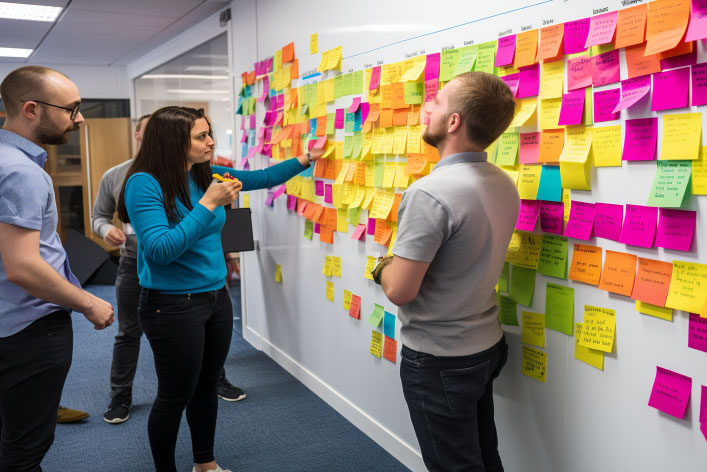
Why Constructive Conflict Should Be at the Heart of Organizational Learning
How to Implement an Organizational Learning Strategy by Designing Experiences—Not Training: Part 1
Conflicting priorities in the workplace are often seen as a disruptive force—something to avoid or ignore. But what if, instead of avoiding it, we confront it head on and use it as a powerful catalyst for learning and development?
It’s past time to stop seeing a conflict of interests as obstacles to progress. When managed effectively, constructive conflict fuels shared understanding and drives organizational learning.
The Fast-Paced Trap: Speed vs. Insight
In fast-paced business environments, teams often feel obligated to suppress conflicts of interest to just get the job done. By sweeping areas of disagreement under the rug, we cover up issues that eventually lead to dis-ease in the workplace.
The Hidden Value of Conflict in Learning
The more we explore workplace challenges, the more friction between working parts of the system comes to light:
- We have conflicting goals and objectives.
- We disagree on what issues we should prioritize.
- We have conflicting ideas about how we should address challenges.
These aren’t red flags—they’re goldmines of insight. Misaligned assumptions, varied experiences, and competing priorities reveal more about what’s really going on. Why not use this insight to help design better experiences for customers and employees?
What Is Constructive Conflict—and What Difference Does it Make in Learning?
Constructive conflict is disagreement managed productively and respectfully. It’s not about personality clashes—it’s about surfacing tension and challenging assumptions to improve business processes.
When organizations lean into constructive conflict, they:
- Share deeper insights
- Identify root causes of dis-ease—not just symptoms
- Build trust within and across teams
Research shows that well-managed conflict fosters shared understanding and collective learning. Insight lives in tension. Instead of rushing to gain consensus, explore disagreement with curiosity and an experimental mindset.
From Quick Fixes to Sustainable Insights
Under tight deadlines, teams often try to simplify complexity. However, designing learning and performance support resources based on a distorted view of the big picture risks:
- Reinforcing ineffective ways of working
- Focusing limited resources on problems that are not urgent
- Ignoring nagging frustrations expressed by people, we think we are helping
By looking at business processes from the points of view of different people—customers and employees—we can prioritize designing desired experiences rather than training.
Final Thought: Conflict Is an Opening to Progress, Not an Obstacle
The next time conflicting views emerge during a team meeting, don’t be so quick to try to smooth things over. Instead, be intentional about providing space and time to respectfully listen to learn:
- What assumptions need to be examined?
- Have we intentionally looked at the situation from different points of view?
- Are people expressing conflicting priorities or just different priorities?
Think of conflict as a doorway to walk through, not an obstacle to overcome. You might be surprised by what you learn simply by being willing to open the door to discover what’s on the other side.


 Debra@DesignXperiences.com
  470-846-1992